Thursday, June 5, 2014

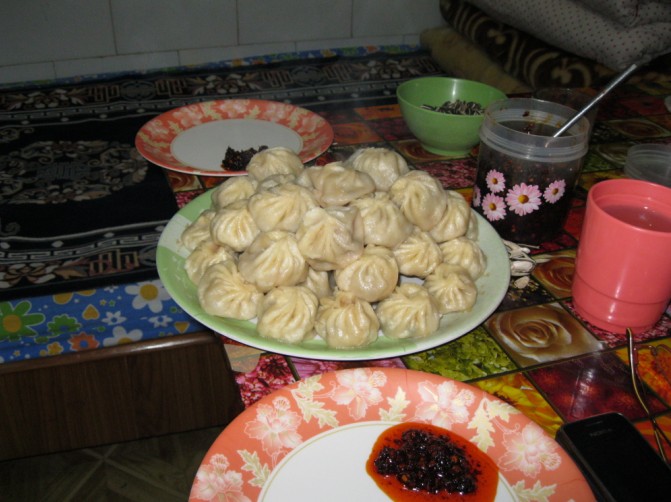
Extra-filling Veg Momo for Saga Dawa

It's Saga Dawa, the Tibetan Buddhist holy month encompassing the Buddha's birthday, enlightenment and death.  Many Buddhists choose to go vegetarian for the first 15 days of the month or the entire month. For people used to the generally meat-heavy Tibetan diet, Saga Dawa can be a bit of a shock to the system.  And pretty much everyone complains about being hungry.  Tonight, my friend Lhamo and I decided to make veg momo and, on a whim, I decided to tweak it.  The result was super delicious and super filling.  Lhamo said these were the best veg momo she'd ever eaten and she's a hardcore Khampa carnivore, so I think we accidentally stumbled upon the best veg momo recipe.  The following recipe makes approximately 30 momos.  The two of us couldn't finish them.  We only finished 20.


Start by making momo dough as usual and letting it rest

Ingredients
3 medium sized white or yellow potatoes, cubed
1/2 a medium sized yellow onion, finely diced
1 medium sized shallot, finely diced
1 bunch of scallions (approximately 6 scallions), finely diced
1/2-3/4 cup of plain, whipped cream cheese
3/4 cup peas (frozen is fine)
Small bunch of cilantro (golf ball sized), finely chopped
1/2 tbs garlic, finely chopped
Salt, to taste

Put the potatoes in plenty of water to boil.  When the potatoes are soft, mash them with the garlic and cheese.
When the mash is smooth, mash in the onion, shallot, scallions, and cilantro.
Gently stir in the peas. Taste and salt to taste.

Fold the momos and steam for 20 minutes.

Although delicious with regular chili sauce, these momos are especially delicious with thai sweet garlic chili.  I know it sounds weird, but trust me. It can't be beat (except possibly by mixing it with spicier chili.)


Super rich, super creamy, super filling.  It was awesome.

Sunday, September 23, 2012

Momo Experimentation

Last night, on a whim, I made momos.  Just for fun, I used a handful of chives from the garden.  After much experimentation, I think I should start using 1 part chive, 2 parts scallions, 1 part onion, and 3 parts meat.  I am considering cutting out the white onion entirely.  The chive and onion provided enough of a depth of flavor and texture that I'm inclined to think the white onion might be unnecessary. Many momo experiments shall follow!

Also coming soon: How to make Bhoeja!

Monday, September 17, 2012

How to Survive Tibetan Tea Culture

(I wrote this article in 2009, while staying in Tibet.  I had been approached by two Tibetans and one American. All three were baffled and deeply uncomfortable with the opposite culture's approach to tea.)
A traditional meal in Kham, with an unending cup of Ja Nakku at the corner of the table

I never realized this was a major issue, but now several people in the past two days have expressed to me how much stress Tea Culture causes between foreigners and Tibetans. I would like to share my brief guide to surviving Tibetan tea culture.

First of all, there are many types of drinks that fall into the tea catagory. Not all of them are actually tea, but the rules of Tibetan Tea Culture apply to all.

Chu Kolwa, ཆུ་འགོལ་བ boiled water. This will just be hot water that has been boiled for several minutes.

Ja Suma ཇ་སྲུབས་མ། Churned tea. This is the classic Tibetan butter tea also called བོད་ཇ་ bhoeja, Tibetan tea. Despite what foreign writers say, I have never had it with rancid butter. Dri (female Yak) butter just tastes much sharper than cow butter. The tea is made of a strong black tea, milk, butter, and a pinch of salt all churned, these days using a blender, and served hot and frothy.

'o ja, འོ་ཇ། Milk tea. More popular in eastern Tibet this is just tea and milk. In Kham they may add a little bit of salt, but more likely it will be plain.  It is also called Amja ཨམ་ཇ་ because of its popularity in Amdo.

Ja Ngarmo ཇ་མངར་མོ། Sweet tea. Black tea with milk and sugar. Popular only in major cities like Lhasa and considered a speciality. Probably Indian influence.

Ja Nakku/Nakpo ཇ་ནག་པོ། Black tea. Plain black tea, usually with a pinch of salt.


When you arrive in any Tibetan home, you will be sat down and immediately offered a cup of one of the above mentioned forms of tea. If you have only recently arrived in Tibet, ask for the Chu Kolwa for the sake of hydration.

Tea will be offered no matter how brief your stay in the house is. Do not refuse it unless you are with a Tibetan who refuses it as well and you both have a damn good reason. If you don't have time to sit and drink tea, don't worry. Accept the cup, take a few sips, and then ignore the cup and leave whenever you have to.

Tea will be offered with the words "ja tung" or "solja choe". Ja tung (Drink tea) is more common in amdo and kham, while Solja Choe (Honorific: consume some tea) is more common in Lhasa area, or in a home where they are trying to impress you. Accept the tea with both hands.

Your cup will be refilled any time you make a dent in it. This creates a lot of tension because in western culture, if we are given a cup of something to drink, we need to drink it to show our host that we enjoy it. Then the host may ask us if we would like another and we can feel free to refuse if we are full. We would never ignore a cup, because that would be rude to our host. In Tibet, this is not the case. Your cup will be refilled whether you want it to be or not. what you should do is drink slowly (you will drink a LOT over the course of the evening.) especially smiling and taking a sip whenever your host tells you 'ja tung'. 

Drinking slowly will make you appear to be drinking more. Whenever you feel full, simply ignore your cup. It will be refilled to the top and you can safely ignore it. Occasionally taking a tiny sip is a good idea, and if you drink slowly you can pace yourself and drink more, but ignoring your cup is completely OK. Do not get frustrated at the constant filling, do not feel like you need to drink every glass to completion. You can feel free to politely say "no thank you" to a refill, but this will most likely be ignored. Your host will pressure you to drink more, nod in assent and then take a tiny sip and ignore the cup. This is OK.

Tibetans, in turn, are often frustrated in western homes. When offered tea, they are given one small cup and when they finish it, usually no one offers them more. One Tibetan man told me that when visiting western homes, he now carries a large thermos bottle that holds the equivalent of about three cups of tea! When sitting around, especially at a Tibetan restaurant in Tibet, with Tibetans, its a good idea to top off everyone's glasses every couple of minutes. If nothing else, it will show you as a good host.

Finally, do drink the tea! Butter tea can take some getting used to, so most Tibetans will automatically offer westerners some sort of alternative option. No one will ever take offense if you ask for black tea or hot water. Asking for hot water is especially normal. As for the other teas, I reccomend you try them. Butter tea is very refreshing especially in winter, but it takes getting used to. black tea and milk tea are very easy for the western palatte. But the big thing is drink the tea. Refusal is offensive and in Tibet the altitude makes hydration especially important. Yes, you will be peeing every five minutes, but its better than being extremely sick. Over time, you will learn to enjoy the constant flow of tea and the social situations it creates.

Friday, September 14, 2012

Preparing Droma and Droma Dresi and Droma Markhu

Tibetan food, traditionally, does not have a lot of sweets and there are not a lot of naturally sweet ingredients in Tibet.  However,  there are a few.  One sweet ingredient, unique to the himalayas, is droma.  Droma is a sort of wild sweet potato.  It is small, dark brown root, with a grainy texture and a mild and naturally sweet flavor similar to molasses.  Droma is used in a few Tibetan sweets, especially Droma Dresi and Droma Markhu.

Droma Dresi (left) and Droma Markhu (right), a recent photo from Yushu, Kham
Droma is stored dried, and as a result can keep for several years. When my friend M and I prepared Droma Dresi this past weekend, we were using Droma that was well over a year old, and that's fine. However, it does mean that it requires special preparation.


Techniques vary, but most people recommend soaking the droma over night. Just put the droma in a bowl and pour water until it completely covers the droma, and then a little bit more. Leave this over night and the droma will be ready to use in the morning.  Note that this is not ready to eat, just ready to use.
Soaked Droma
The simplest preparation of Droma, and the one most abhorrent to non-Tibetans, in Droma Markhu.  Mar means butter, and Khu means clear soup or juice.  Markhu, basically, means melted butter.  So Droma Markhu is droma absolutely floating and drenched in melted butter and sugar.  If you look at the top pictre, there is a dollop of sugared butter on top of the hot Droma, which will then be stirred in.  To prepare Droma Markhu, just boile the droma for about 5-10 minutes until it has become tender enough to easily bite, but not soft.  Mix butter and sugar.  Dollop.  Did I mention that Tibetan food is not heart friendly?  Delicious though.

The most popular Droma desert is called Droma Dresi, or sweet rice with Droma.  This is not only a desert, but a celebratory dish.  If you attend religious festivities, a wedding, or any other big Tibetan special event, chances are the first thing that will happen is people going around passing out cups of bhoeja (Tibetan salt and butter tea) and droma dresi.  Another fun fact:  I have not yet met anyone, no matter how unfamiliar with Tibetan culture they were, that hasn't liked Droma Dresi.  If you can't get droma, you could replace it with cubed yam or leave it out altogether. However, I think it's worth the effort to find it.

So, without further ado,

Droma Dresi

Ingredients:
3-4 cups of Basmati rice (really this depends on how many people you are serving)
a heaping handful of Droma
a handful of golden raisins
a handful of cashews
a cup of pineapple, cut into small bite-sized pieces (optional and not traditional, but I had it this way in Xining, Amdo, and fell in love with it)
sugar to taste
half a stick of butter (minimum!!!)

Pre-prep:
Soak the Droma overnight in room-temperature water.  Drain before preparing.

Preparation:

-Prepare the Basmati rice according to instructions
-While the rice is cooking, soak the golden raisins in warm water for about 15 minutes
-Bring a small pot of water to a boil, boil the dresi for about 5-10 minutes or until tender enough to easily bite, but not soft enough to squish with your fingers.
-When the rice has about 5 minutes left and virtually all the water is gone, stir in the raisins and cashews

Stirring in the raisins will plump them up
-Melt the butter completely

-When the butter has melted, add sugar and hot butter together to the rice, then add the pineapple and droma and stir while still hot

-Taste and adjust sugar

And there it is! Droma dresi, a delicious desert and an important food for special occasions

Our finished product


Sunday, May 13, 2012

Hot Laphing

This weekend, I went to visit Tashi Jong for my first social visit in more than a year.  Of course, I went in large part to visit my friend Sonam, the one who taught me how to make the Summer Chili that I posted very early on in this history of this blog.  Sonam and her sister are absolutely amazing cooks.  I think I eat more when I visit them than any other time in India, except when I visit certain restaurants in New Delhi.

Anyway, not long after I arrived, one heckuva storm hit, knocking out power. This meant we had nothing to do but cook, eat, and talk.  I ended up staying the night because of the sheer strength of the storm (which is always a pleasure with Sonam's family) and I took that time to interrogate her about some of my favorite dishes from her home.  For now, I will just post the recipes. I hope to post a photo guide when I get back to the states.  So let's start with the most unique dish I've ever had at her home, one I've never had anywhere else and I've been craving in the two years since I first tried it: Hot Laphing.  It's a unique mix of Chinese influence in Tibetan cooking!

Now, I've made a Laphing post before, however this starts with a completely different kind of laphing entirely, so be ready for something completely different.

Sonam's recipe started off with "buy one block of white laphing," but for most of us not living in a few specific countries in Asia, that's not possible. Fortunately, white laphing is very simple to make, unlike it's yellow sibling. I'll dedicate a post to white laphing and it's accompanying sauces later, but making the laphing itself is quite simple so let's start with that.

White Laphing (Without Sauce)
1 package of Mung Bean flour (available at most asian groceries)
Water

Take a very large pot on the stove, fill it about half way with water, get that going to a boil.

Meanwhile, take a pitcher and mix the mung bean flour and water until you have a liquid that looks like and has the consistency of light cream.

Slowly, and while stirring, pour the "cream" into the boiling water until you have an odd, gelatinous mess that is mostly clear, but slightly white-ish, like ice. It should not be white.  It should be distinctly translucent.  If it is white, the concentration of mung bean flour is too high and it will have a nasty consistency.


Here is a picture of finished white laphing (the blue is because it is under a tent).  Your gelatinous mess should be slightly-slightly more clear than this:


Once you have your weird gelatin, pour that into a wide tray, I usually use a cake pan, and let it cool and set.  This should take roughly an hour in a cake pan, less if you refrigerate it, and more if you use a deeper pan.  There you go! Laphing!

So now, what we use it for...

Hot Laphing
A large chunk of white laphing (say 2 cups per person), cut into 1" cubes
Vegetable oil
Finely chopped garlic
Meat, cut into bite sized pieces OR vegetables cut into bite sized pieces (less traditional and FAR less flavorful)
Erma/Hua Jiao (Sichuan peppercorns, mentioned at length here) finely ground-a few pinches
MSG (optional)-a large pinch
Salt to taste
Chili powder to taste
Sesame oil
Green onion, chopped

In a pot or pressure cooker, boil up the meat/veg in as little water as you can use to get it to boil.  We don't want to lose any flavor with excess water and we will be using the boiling water.  Just boil it for a minute or two, maximum.

In a large pot, heat up a few teaspoons of vegetable oil (enough to coat the bottom). When that's hot, toss in the garlic and stir until the garlic has browned and the oil has picked up the garlic aroma

Now add the meat/veg and when the oil has stopped sputtering, add some of the water from boiling (approx 1/3 cup per serving. NO MORE.  In fact it's better to go with less and you can add more later!)

Add powdered erma to taste, a pinch of MSG, salt to taste, chili powder to taste and let this cook together for a little while (a few minutes is all it needs).

Gently add the laphing, piece by piece.  Stir gently. It will break up a bit, but you don't want to break it up completely.  Break as little as possible. When the laphing is all stirred in, drizzle with sesame oil and sprinkle the green onion over this.  Give that a gentle stir to mix it in.

There you go! A super quick meal that is absolutely delicious!

Sunday, November 27, 2011

麻辣火锅 Sichuan Hot Pot


Oh, Sichuan hot pot. One of my favorite foods. Anthony Bourdain tried it in Chengdu (the home of Sichuan Hot Pot) and agreed that it's a painful, but beautiful experience, in fact, perhaps you should hear it in his own words. But here's the thing, going out for hot pot is expensive. However, it is not all that expensive or difficult to make at home as long as you enjoy having lots of leftover fresh ingredients in the house. I just made a huge hotpot today, which makes the above picture look like we were starving, so I figured I'd post my how to.

So, what is Sichuan Hot Pot? It's actually called 麻辣火锅, Mala Huoguo. This literally translates to Numbing Spicy Hot Pot. Mala is a common flavor in sichuanese food and it's very unique. It is a bit of an acquired taste, but it's very addictive. The hot is simple enough, Sichuan likes chilis. The numbing is the weird bit. This comes from a spice called "huajiao" 花椒, sometimes called flower pepper, sichuan peppercorn or Chinese prickly ash.
花椒, Sichuan Peppercorn

It's got a spice smell and an odd numbing effect. When eating, you don't want to crunch down on one of these babies, lest the side of your mouth go numb. However, I do recommend trying it once for giggles! Anyway, the final effect of the mala sensation is food that is truly spicy, yet oddly numbing at the same time. People generally don't like it the first time, and then 2 days later at 3 AM have pregnant-woman-style unbearable cravings for it. I'm a fan.

Anyway, no one makes Sichuan Hot Pot entirely from scratch, so I'm just going to tell you how I make it. A friend of mine, an exchange teacher from China, came over and ate it today and she was shocked at how authentic it was, So, although I make no claims as to my technique being authentic, my flavors are.

What you need:


Equipment:
Since this is like a fondue, you need a hotpot bowl, like in the picture above. You can get these inexpensively at most Chinese grocery stores and expensively at most Japanese grocery stores. If you ask for a huoguo pot, they will know what you want. These generally plug into an outlet and have a heating base. You can get them split and this is very handy so you can make two kinds of broth at once.

You can also use a pot on top of a camping stove, just be careful that it doesn't tip over.

A wide based pot on top of a hotplate works as well.

In a pinch, use a crockpot, but since it doesn't get to a very high temperature, you might need to pre-cook any thicker meats.

If you do not have any of these, just make it on the stove and you won't be elegant.

Broth:
Vegetable broth or stock (chicken broth will also work)
Water
1 packet of Sichuan Mala hotpot seasoning (it may be called Chongqing hotpot seasoning. Make sure to ask if it's "mala").
Dried red chilis
Huajiao/ Sichuan peppercorns
Dried dates (available in the bag at chinese grocery stores. These are truly dried, not like the snackable dried dates we get in western groceries)
Dried goji berries
Ginger root
Garlic
Scallion


Mix one part water to one part vegetable broth. Add hot pot seasoning to taste (start with less, you can always add more and it's VERY potent). Add dried red chilis to taste (same rule! Realize the chilis will get stronger as they boil.) Add around a table spoon of huajiao (more if you really like it) 4-5 dried dates, a small palmful of dried goji berries, a few slices of ginger root, 2 cloves of garlic (whole) and 2 scallions cut into large (1 inch long) peices. When this comes to a boil, it will be your fondue broth. In sichuan, it should have a sheen of blood-red chili oil floating on top. That can be painful for lots of westerners. Use caution.


Sauce:

Hot pot is HOT. You should probably dip anything you pull out in something both for flavor and to prevent mouth scalding. So here are the ingredients for the most traditional sichuanese dipping sauce:

Finely chopped garlic
Finely chopped cilantro
Finely chopped scallions
Salt
Sesame Oil

(Optional Ingredients)
Chinese Black Vinegar
Soy Sauce

Mix ingredients in a proportion that you like in a small bowl.

Great Things to Put in Hot Pot
(Just a list of my favorites)

Sliced Beef/Lamb (you can get this from chinese grocery stores, frozen and shaved paper thin, so it cooks up very fast)
Tofu
Fried Beancurd Puffs
Rice Cakes
Udon Noodles
Fish Balls
Meat Balls
Bok Choy
Watercress
Chinese Brocolli
Enoki Mushrooms
Shiitake Mushrooms
Lotus Root
Sliced Yam
Sliced Taro Root
Napa Cabbage

But you can basically add whatever you can think of.


The way it all works together:

Get the broth up to a low boil in your pot. Add a bit of everything! People can add what they like. Everyone has their bowl of sauce, probably a bowl of rice and maybe just another general bowl and a pair of chopsticks. The food cooks quite quickly, with the meatballs taking longest because they are often served frozen. The meat will take less than a minute to cook through, but it's best to leave it in for at least a minute. Pull out what you like, dip it in the sauce (I usually let it sit for a few seconds to cool) then yank it out and eat! Enjoy!

Goes Best With:

Beer or soda, especially pepsi and fresh fruit for dessert.

PROTIP:

Tums before the meal. Seriously.

Friday, October 28, 2011

MASS TENTHUK!


Tenthuk, obviously my favorite food. Previously, I've included tenthuk recipes for one. The following is quick tenthuk for the whole family. I made the following for 6, we had a lot left over, but we did finish about 2/3rds with each of us having 2-3 bows. So, this recipe could serve ten. Or, make the whole batch and freeze it in ziploc bags to make easy single servings.

TENTHUK FOR THE MASSES! (With Measurements!)

Dough:
5 heaping handfuls of flower (Approx 9 cups)
Water

Soup:
3 inches of ginger root, finely chopped
2/3 bulb of garlic, (around 8 cloves) finely chopped
1 medium-large onion, chopped
3 medium tomatoes, chopped
2 lbs beef or lamb cut into bite sized peices
Baby Bok Choy or other greens, several large handfuls
12 stalks of scallions, roughly chopped
Salt (to taste)
Soy Sauce (to taste)
Water

Mix the flower and water until the dough is no longer sticky. Knead until a smooth ball.
There will be a lot more than this, this was a smaller batch

Wrap this in a plastic bag and let it sit and relax for a while.

Meanwhile, finely chop the ginger and garlic.
You can see the finely chopped ginger in the bowl, but it wasn't enough.

Chop the garlic and put with the ginger. Chop the onions, set aside. Chop the tomatoes, set aside.
My lovely assistant, Karma. Onions make me cry.
Note the massive pot, that's what we're using.

In a large pot, heat up 3-4 TBS of vegetable oil. When the oil is hot, add the ginger and garlic and a pinch of salt and stir until the oil has become fragrant and the garlic has slightly browned.

Add the onions, and a hearty pinch of salt. The onions should reduce and slightly brown.

Add the tomatoes and another hearty pinch of salt. The tomatoes should reduce until you have a sauce-type consistency.

Add the meat and scatter a teaspoon of salt over it all. Stir until the meat has browned and it's started to form liquid.

Pour water over all of this until you have a large pot of broth with meat in it. I think we used around a gallon of water or more.

As the water is coming to a boil, take your dough out of the bag and separate into fist sized balls. Coat these balls with vegetable oil.

When the water has come to a boil taste and adjust salt and soy sauce. Roll a dough ball into a long snake like rope. Flatten between thumb and forefinger to form a long tape. Throw in small pieces of the dough into the boiling water. Stir occasionally to prevent sticking.

When all the dough is in the water, stir in the bok choy or other green vegetable. Stir. Bring to a boil again.
Mmmm, we made so much tenthuk it overflowed and we had to put some in that bowl on the side! lots of tenthuk!

When it's back to a boil add in the scallions. Stir for about a minute. Serve hot with chili sauce!

Wednesday, August 17, 2011

Beef Negimaki for Cheaters

DISCLAIMER #1: This isn't a Tibetan, Central Asian or Chinese dish. It's Japanese.

DISCLAIMER #2: This is a dish that I basically reverse engineered based on flavor. Therefore, it is probably COMPLETELY inaccurate. However, it tastes like the beef negimaki I get in restaurants and so I'm happy. I do not claim that this is an accurate Japanese negimaki recipe.


Aside from sushi, my favorite thing to order at a Japanese restaurant is beef negimaki. Beef scallion rolls. It is my absolute favorite hot dish, followed closely by a good udon soup.

I'm currently in Taiwan, so after Chinese ingredients, Japanese ingredients are the easiest things to find. Japanese food has become a staple in my kitchen. That said, I know nothing about Japanese cooking. Any japanese dishes are reverse engineered. I know the taste, I recreate the taste. They are likely completely inauthentic, but they TASTE GOOD. So there.

Ingredients:

Package of udon noodles (ideally not the dried kind)

soy sauce
something sweet (sugar, mirin, or honey)
chopped or shaved ginger root
I added some ponzu sauce because why not? I had it in the cupboard. Give me a break. I just finished work and I was hungry.

finely sliced sheets of beef
scallions


First, get a pot of water up to a boil. Throw in the udon noodles. If they are the vacuum packaged kind, not the dry kind, they should boil up really fast. Drain them off and set them aside so that they aren't scalding hot when you eat them.

Next, in a small bowl, mix soy sauce, water, ginger and your sweet substance of choice (I usually use mirin or sugar. I had neither today, so I used honey.) It should taste like a slightly watery teriyaki sauce, but the texture should be very watery. Why water? you're going to boil this, so you want it thinned out.

Lay each sheet of beef on a cutting board. Put 5 or 6 sprigs of scallions, green bits and white bits, in the middle. Roll it tightly until you have a long, thin roll. Skewer or tie with cooking twine. Repeat until all the scallions and beef are gone.

In a frying pan, bring your watery sauce up to a boil. Fry (braise?) the rolls in the liquid. Give enough time for the scallions to turn brilliant green. Pull them out of the pan, but let the liquid continue boiling. As it's boiling, slice the rolls into medallions. Put the medallions on top of the udon. By this point, the sauce should have reduced substantially, although it will still be a rather thin sauce (it always is). Dribble this over the rolls and noodles.

EAT.

Tuesday, August 9, 2011

My tenthuk


Well, the tenthuk is the one dish I didn't take a photo of. I have bronchitis, so last night I made more tenthuk. I had no greens, so it was the super simple version. Here's a picture. It was delicious.


Monday, July 25, 2011

Quick Tenthuk

So, I'm in Taiwan with a terrible cold right now. As evening rolled around, and I was completely exhausted and coughing, I had the question of did I want to go out and get dinner, which would involve turning myself into a functional, multilingual human being, go outside into the terrible heat, walk at least half a mile to go to a restaurant, or was I going to cook at home. Well, I wanted something for a cold, so I decided to make my go-to comfort food: Tenthuk.

Now, I have already posted the most traditional tenthuk recipe that I know, but that recipe takes a long time to prepare. It's very rare that your average person outside of Tibet takes the long time involved to make that meal. So the following recipe can be made, start to finish, in less than half an hour. Which is roughly the amount of time I was able to remain conscious. There are no photographs because I was having enough trouble figuring out whether I had added soy sauce or chinese black vinegar to the soup. Fortunately, it was soy sauce.

I made this for one (myself), ate two midsized bowls of it and the rest (I'd say about 1/3 of what I made) is in the fridge, so I would say I made the right amount. As a result, the amounts will seem like very little.

Ingredients:

2 cups Flour
Water
Vegetable oil
1/4 lb of beef, cut thin, one inch pieces.
half a medium sized tomato, chopped
1/4 of a large white onion (or one half of a small white onion!) chopped
1/4 inch of ginger root, finely minced (I went overboard with the ginger. It was delicious)
1 clove of garlic, crushed and minced
2-3 sprigs of scallions, roughly chopped
handful of greens of your choice (optional. I didn't have any. I recommend baby spinach)
soy sauce to taste
salt to taste
chili powder to taste

First, make your dough. Like a lot of the dough described previously, mix flour and water until you get a stretchy, but not terribly sticky ball of dough. You will need to knead it and experiment with how much flour and water. I never get it right on the first try. When you have this big ball of dough, separate it into small balls, about half the size of a fist. pour a little bit of oil over these and roll them around until they are lightly coated in oil. Cover this. If you haven't chopped your meats and vegetables and stuff, you might as well do it now. The dough does well to wait a bit, but it's not too necessary.

Take a pot and put it on the stove, heat up a bit of oil and start to fry up your meat. Stir this around a bit and add a sprinkling of salt. When the oil has picked up some meaty flavor, dump in the garlic, ginger, onions and tomatos. When I don't feel ready to fall down, I add the garlic and ginger first and fry that a bit before adding the others. Give me a break, I am sick and this is faster.

When the tomatos and onions have reduced, add water until you have about 2/3 your desired soup volume. Now add salt and soy to taste.

While this is boiling up you can add chili, if you like, or any other spices you want. Although my version is pretty traditional, don't hesitate to tweak it to your personal tastes!

When the soup is boiling and flavored as you like it, take a dough ball and roll it into a snake-like coil.

For this next step, you may need to add some oil to your fingertips. Take the dough coil and pinch it between your fingers to make a long tape, around 1 inch wide, and 1/8 of an inch thick or even thinner. Tear pieces off (about 1 inch by 1 inch) into the boiling soup. Stir occasionally. Continue until all the dough is gone, or until you have enough noodles. You can freeze the remaining dough for later.

The dough will need only a couple of minutes to boil. Remember to stir occasionally so the noodles don't stick.

As this is coming to a boil, toss in the scallions and greens. They should take only a minute to cook. When the greens have reduced or the scallions have slightly changed color, your soup is ready to eat! Enjoy!

Monday, July 18, 2011

In Taiwan

So recently I came to Taiwan. I've been home for a while and my cooking has been limited to things like peanut butter cookies and pumpkin cake. Today, however, I am going to the market and I plan on making good food! The blog shall live!

Wednesday, March 23, 2011

Losar Sang! Minyak Pholo

Happy Losar! Yes, I know I'm a few weeks late, but I've been moving. Anyway, I've decided to post a special Losar recipe to celebrate, even though I am late.


A Losar Altar

I spent much of this losar with my friend, Drolma, from Chamdo. She's a great cook.

Drolma with a bowl of Droma Dresil, or sweet rice, to start our Losar

Beef Momos

Anyway, I started to get nostalgic for a food I had during Losar of 2009, in the Minyak region of Kham, Pholo. Pholo is a big, puffy, sweet momo. While I have had some sweet momos in other areas of Tibet, Pholo are my favorite and are very unique. Outside of Minyak, I've never met people who've eaten them. Perhaps a few other areas of Tibet eat Pholo, but I've not encountered them. After talking with Drolma, we decided to make Pholo. We made a bunch and several people, Tibetan and western, helped us eat them. Everyone loved them, so I decided to share the recipe here.

Minyak Pholo
Ingredients:
Flour, 1 kg
Baking Powder, 1 handful
Powdered Chura, 1/4 kilo (Tibetan dried cheese)
Sugar, 2 big handfuls
half a kilo of Tsampa (Tibetan barley flour)
Walnuts, 2 handfuls, crushed
Butter, 5-6 sticks, maybe more....

Equipment
a steamer

Chura is kind of hard to get outside of Tibet. I'm not sure if there is a good replacement for it. I'm just going to have to assume that you have chura. Otherwise, I'm sure it will taste good without.

Chura is rock hard, so take your chura in a bowl and pour about one cup of warm water into it. This should be absorbed immediately. Stir it around so that all of the chura gets wet. The Chura should quickly start to soften.

soaking Chura

At this point, add the sugar to the chura and stir it around. If you are working without chura, you can mix the sugar into the Tsampa instead.
In another bowl, mix your flour and baking powder together. Make sure its well mixed. Then add water until you have a stretchy, flexible dough that looks kind of like this
Wrap this in plastic and ignore it for a while.

Next, mix your chura and tsampa together.

Gather as much butter as you can get on short notice. Melt it ALL.
We found four sticks of butter...it wasn't enough.


Mix your butter with your tsampa, chura, sugar and add the crushed walnuts. Knead this into a dough and make little balls out of it.


Take the dough out of the bag. Tear off small peices and make little discs of dough, like so.

Put a tsampa ball in the middle then wrap it up and roll it around in your hands until it forms a perfectly round, smooth, wrapped ball.

Continue until all the balls are wrapped

working hard in our Losar finery

Finally, steam the momos for 20 minutes. Make sure to give them room as they puff up.


Finally, ENJOY!


Now, I bet you're asking "How on earth was 4 sticks of butter not enough?" The answer is in that picture above. The filling is alike a paste, when it should be goopy from the melted butter. It tasted delicious but the filling was slightly too dry. I figure half again as much butter should do the trick.

Happy Losar to you all!

Sunday, January 23, 2011

Experiments with Sichuanese flavors: Garlic Chili Green Beans

So, I met a friend for lunch and we faced the usual issue: I don't like vegetables. I really don't. I make an exception for a few, but by and large, I don't like veggies, unless they are raw. Even then, I'm picky. So when my friends make lunch, I always eat enough to be polite, and avoid the vegetables, but today I found my solution. I volunteered to cook green beans, a personal favorite. Now, most of my Tibetan friends here have never had green beans, so I had to improvise a good recipe. So the following is an experiment with Sichuanese flavors, everyone liked it and polished them off!

INGREDIENTS:

Green beans (1 kilo)
Garlic (4 large cloves)
Scallions (one batch, around 6 bunches)
Soy Sauce to taste
Chili
Ginger
Huajiao (sichuan peppercorn)

OR, you can replace the 3 proceeding items with 1 TBS of Chongqing hot pot paste

Cooking oil OR a nice stock or broth

First, for those of you unfamiliar with Chongqing hotpot (huoguo) paste
mmmm, hot pot!

Basically, its a mix of all the spices you would use in a sichuan style hot pot. Chilis, oil, huajiao, ginger, garlic, star anise, everything. It's great in hot pot, and a little bit of it makes a great seasoning on just about anything else. We didn't have ginger or red chilis today, so I just used a table spoon of this.

OK, so start by snapping the ends off your green beans.

Crush and chop the garlic finely. The scallions should be in larger peices.

Now, in a pan or wok, heat up some of your stock or oil. We used about a cup of the broth left over from cooking chicken today. It was delicious. A warning about using oil, you're going to be putting chilis into this, so make sure you do it so that you don't smoke out your house causing everyone's lungs to shut down. I've done it. My parents were very displeased.

When the stock is pretty hot, add the garlic, hot pot spice and some soy sauce. Stir until the hot pot spice is broken up or dissolved. Then throw in your green beans and stir until they are well coated with spices and garlic.


You can pour some soy sauce on top now if you want it a bit saltier.

At this point, throw in half of your scallions, continue stirring.


Make sure there is enough liquid at the bottom. You can add more stock or just plain water, but add soy sauce to adjust the taste if you put in water. Cover and steam until the beans are cooked as you like them. I like my beans crunchy and slightly underdone, but everyone has their own preference.

Alternately, if you are cooking in oil, just continue to stir-fry until they are as done as you like.


Finally, the final product! Salty, spicy, crunch, Sichuan style green beans!

Monday, September 13, 2010

An evening of cooking success!

Last night my friends and I hosted a Yushu fundraiser dinner. Saturday and sunday we spent all day cooking. My friends, Jessica, Tashi and I made about 400 momos, 200 meat and 200 potato. We bought a nice garlic chili sauce and I also made the summer chili recipe and we made a small side salad .

We had a few disasters including sticky steamers (even when oiled) a freezer accident where a whole bunch of momos stuck together, and arriving at the venue to find no sound system set up, but in the end it was a great success.

More than a pound of chili sauce was gone to the scrapings, we we finished the evening with a handful of each kind of momos, which we gave to the staff of Emack and Bolio's who gave us their space for the evening. We earned more than $600 to donate to victims of the quake in Yushu this past April.

All in all, a cooking success story!

HUGE thanks to the Palden family, fantastic local musicians Taina Asili, Gaetano Vaccaro and David Rubin who performed, and our wonderful friend Sonam who rushed in when crises hit at the end.


Recipes we cooked:

Beef Momos
Potato Momos
Sonam's Summer Chili

Friday, September 10, 2010

Uyghur Rice with Lamb

I was introduced to Uyghur food in 2008, and have been addicted to it since then. Uyghur food is similar to Jewish or Turkish food, and its very unique in central Asia. One of my favorites is a rice dish, I believe called "Polu" but I am not sure. I've heard the name only in passing, but I insisted on learning how to make it. So here's another favorite of mine

Uyghur Rice with Lamb

Ingredients:

2 cups basmati rice
3 cups water
1 lb of cubed, bite sized lamb (The lamb in my pictures was actually cut too large)
1 medium sized/small tomate, chopped
1 medium white onion, chopped
1-2 handfuls of shredded carrot
1-2 handfuls of golden raisins
2-3 tsp salt (to taste)
cinnamon (to taste)

Directions

Start by chopping your onions and tomatoes and shredding your carrots. I really think organic adds a lot of flavor, so if you have the choice, go with that. We used a nice heirloom tomato, which provided great flavor!


Heat up a pan with some oil. Start browning the onions and the meat together. Keep cooking until the onions have reduced.


When the onions have reduced, add chopped tomatoes.


Stir until the tomatoes have also reduced.

When the tomates are reduced, add your carrots right on top.


Now add the cinnamon and salt, stir and taste to make sure it tastes right. It should taste a bit saltier than you will like the final product, since you will be adding a lot of rice.


Once the spicing is correct, add 3 cups of water.


on top of this, well destributed, pour 2 cups of basmati rice.


Sprinkle a handful or two of golden raisins on the top.


Cover and cook on a medium flame for 25 minutes. On an electric stove, you might need to adjust this. The water should be simmering.


Stir and eat! mmm.